
Skin & facials
Chemical Peel in Bracknell
A 30-minute superficial peel for skin that looks dull, uneven or congested — brighter, smoother and more even, without a week off work. £70 for one area, or three sessions for £180.
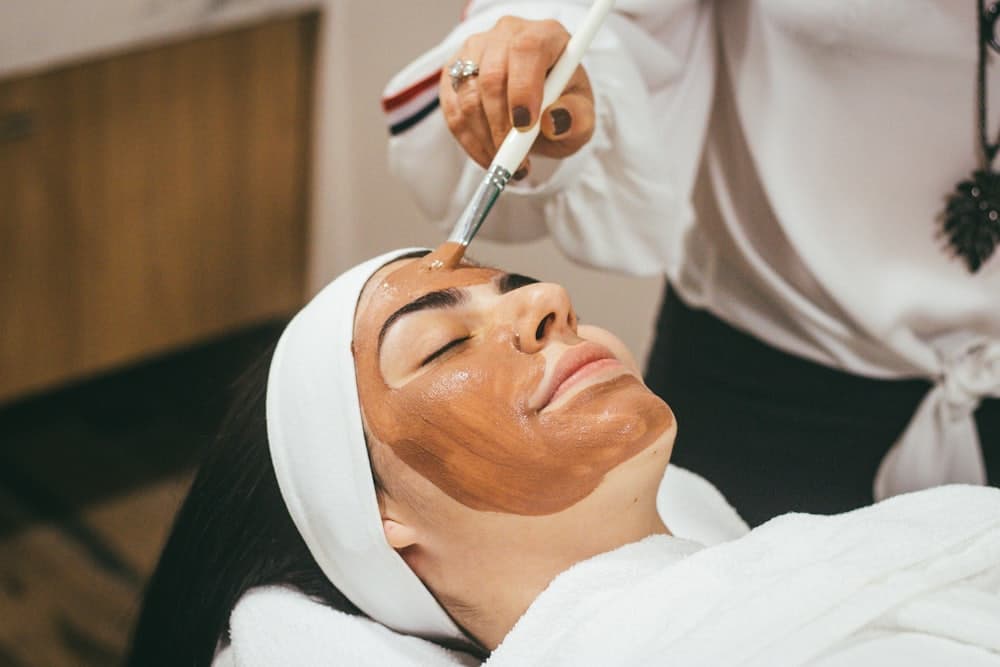
A chemical peel is the treatment to book when your skin has stopped looking like itself — dull rather than lined, uneven in tone, rough to the touch, congested around the nose and chin, or marked from spots that healed months ago. A solution of acids is applied to cleansed skin, left for a timed period judged for you, then removed. Over the following days the tired outer layer lifts away and the fresher skin underneath becomes the surface.
The peel used here is BioRePeel, and it is chosen for a specific reason: it is formulated to do the work of a strong acid without the frosting and heavy shedding of a traditional deep TCA peel. That is why the appointment is thirty minutes and £70, and why you are not booking a week off work. It sits on the same skin and facials menu as dermaplaning and microneedling, and Safina will happily tell you if one of those is the better answer for what is actually bothering you.
What a peel helps with
- Dull, tired, flat-looking skin — the most reliable thing a peel does, and the reason most people book one.
- Uneven tone and patchy pigmentation — sun-related patches and the brown marks left behind by old spots, worked on across a course.
- Rough, bumpy surface texture — skin that looks fine in the mirror and feels wrong under your fingers.
- Congestion and visible pores — blackheads and blocked follicles around the nose, chin and forehead.
- Oily, breakout-prone skin — a resurfacing treatment for skin that is not settled, once any active inflammation has calmed.
- Neck, chest, décolletage and hands — the areas that age visibly and get left out of everything else.
What it does not do is rebuild anything. Lines caused by muscle movement are a job for anti-wrinkle injections, lost volume is a job for dermal fillers, and crepey, dehydrated skin that has lost its bounce is what an injectable skin booster such as Profhilo is for. Indented acne scars need something that reaches below the surface, which is microneedling. A peel is the surface, resurfaced — and it is very good at that.
The honest part
No, a peel does not build collagen
Almost every peel you will see advertised is described as collagen-stimulating, detoxifying or regenerating. We are not going to say that, because the advertising regulator has looked at the evidence and reached a different conclusion. The Advertising Standards Authority’s own guidance on chemical peels (last updated 28 July 2025) states that CAP has not seen evidence that either clinic-based chemical peels or at-home products can stimulate collagen production, and that claims such as “detoxify” or “helps with cell regeneration” are very likely to be unacceptable in the absence of very robust clinical evidence. What CAP does accept is that exfoliation removes the dead layer of skin on the surface and improves the appearance of the skin.
So that is the claim we will make, and it is worth having. A peel resurfaces: brighter, smoother, more even, with less congestion and a better canvas for everything you put on afterwards. If what you want is collagen, the honest recommendation is microneedling, which sets out to provoke exactly that response and runs as a course. The two are complementary rather than interchangeable, and plenty of clients end up doing both.
The second honest thing is about depth, because the word “peel” covers treatments that are nothing like each other. DermNet groups them by how deep the injury goes: superficial peels stay within the epidermis; medium-depth peels, typically trichloroacetic acid at 20–35%, cause intense inflammation and swelling that takes a week to settle, and most people take that week off work; deep phenol peels are rarely used now because of toxicity and scarring risk. This is a superficial peel. It is not the dramatic before-and-after you have seen on American television, and it is not meant to be. That distinction is built into how the UK proposes to regulate peels too — the government’s consultation on licensing non-surgical cosmetic procedures in England puts peels that reach only into the viable epidermis in the lowest-risk green tier, medium-depth peels through the full epidermis into the upper dermis in amber, and phenol peels in red.
Worth knowing, since nobody else mentions it: that licensing scheme is not in force yet. The Health and Care Act 2022 gave the Secretary of State the power to create it, but the government’s consultation response, published 7 August 2025, confirms that chemical peels stay within the intended scope while further consultation and parliamentary debate are still to come. Until it lands, anyone in England can legally apply acid to your face. That is precisely why who does it matters more than what it costs.
What you actually get
Thirty minutes, one area, £70
A peel here is a thirty-minute appointment for £70 and covers one area. That area does not have to be your face: the menu lists face, neck, décolletage, knees and hands, and there is a body version for hands, chest, neck and décolletage at the same starting price, with extra areas charged on top. The neck and chest are usually the giveaway when a face has been well looked after and nothing else has, so they are worth considering.
If pigmentation, congestion or acne marking is the reason you are booking, the course is the better value and the better treatment:
- Three chemical peel sessions (£180) — £30 less than booking three singles, and flexible: use them as three appointments spaced out over time, or as three areas in one sitting (face, neck and hands, for example). Pigmentation and marking respond to repetition, not to one heroic appointment.
- Dermaplane & chemical peel (£100, 1 hr) — the strongest pairing on the skin menu, and not just a bundle. A 2023 laboratory study in AAPS PharmSciTech found that dermaplaning removed the stratum corneum, measurably lowered the skin barrier and significantly increased how well applied products passed through it. In plain terms: clearing the dead surface first means the acid reaches further, which is exactly why the two are sold together.
One thing to keep straight, because the menu can read confusingly: the enzyme peel that forms part of the jelly-mask facial and the microneedling protocol is a gentle preparatory exfoliation, not this treatment. A chemical peel is booked in its own right.
In the treatment room
One practitioner, start to finish
Safina consults, decides the strength, watches your skin through the whole contact time and is who you message afterwards if something worries you — in her own private studio, with unhurried appointments and no handing you between staff.

What to expect
Your appointment, step by step
Consultation & skin check
Before anything is applied, Safina looks at your skin and takes a history: what you use at home, how your skin behaves with acids and in the sun, any medication, any past pigmentation, and whether today is genuinely the right day. This is also where the strength and the contact time are decided — a peel is not one fixed treatment applied identically to everyone.
Cleansed and prepared
The area is thoroughly cleansed and degreased so that oil, makeup and SPF are not sitting between the acid and your skin. An even surface is what produces an even result; a patchy prep is what produces a patchy one.
The peel, applied and timed
The solution is worked across the area and left for a timed period judged for your skin, not for the clock on the wall. You will feel tingling or warmth building and then settling. Safina stays with you and watches the skin throughout — that is what the appointment is actually for.
Removed, calmed and protected
The solution is taken off, the skin is calmed and hydrated, and you leave with SPF on. Freshly exfoliated skin is more open to the sun than usual, so sun protection is not an optional extra at the end — it is part of the treatment, and it carries on at home for weeks afterwards.
Afterwards
Aftercare, and who it isn’t for
The days after a peel are simple but not optional. Expect skin that feels tight and a little dry, sometimes with light flaking around the nose, chin and hairline — usually much less than the word “peel” implies. Do not pick, scrub or help it along; let it come away when it is ready, because lifting skin that is still attached is how people end up with marks. Keep the routine short for a week: gentle cleanser, a plain moisturiser, and nothing else. Retinol, acids, exfoliating scrubs, hot yoga, saunas and sunbeds all wait until your skin feels normal again.
Sun protection is the part that decides whether the result holds. DermNet’s aftercare guidance for peels is to protect the skin from the sun “especially for the first 6 months” — not the first weekend. Freshly resurfaced skin is more vulnerable to pigmenting, and pigmentation earned by skipping SPF after a peel is harder to fix than whatever brought you in. Daily SPF, every morning, including in British weather.
It is not right for every skin on every day, and the consultation exists to catch that. Broken, sunburnt or actively inflamed skin means waiting, as does a flare of eczema, rosacea or dermatitis, and so does a cold sore anywhere on the face — the NHS notes they are contagious from the first tingle until they have completely healed. If you take isotretinoin (Roaccutane), the NHS advises not to “have skin treatments such as microdermabrasion or chemical peels” while you are on it. Tell Safina if you are pregnant or breastfeeding: the clinic lists dermaplaning as its pregnancy-suitable facial and makes no such claim for the peel, so that is the sensible swap. Mention any aspirin or salicylate allergy, any tendency to keloid scarring, recent sun exposure or fake tan, and any prescription retinoid or strong acid you use at home.
Skin tone belongs in this conversation too. DermNet states that people with Fitzpatrick skin types IV to VI have an increased risk of dyspigmentation and of hypertrophic and keloid scarring, and that peels “must be performed cautiously with full patient informed consent”. That is a reason for a more conservative strength, a shorter contact time and building up gradually — not a reason to be turned away, and not something to discover afterwards.
Because nobody is licensing peels in England yet, the checks are on you. The NHS guide to choosing who will do your cosmetic procedure advises asking what qualifications and training a practitioner has, how many of these they have done, and whether they are insured. Safina has sixteen years in the beauty industry, holds a Level 5 Ofqual qualification in aesthetics and is fully insured — more on the about page, and what clients say on the reviews page.
Pricing
Chemical peel prices
£70 covers one area for thirty minutes. The three-session course is £180 and can be spent as three appointments or three areas, and the hour-long pairing with dermaplaning is £100.
Chemical peel30 min
One area: face, neck, décolletage, knees or hands
£70
Chemical peel on body30 min
One area: hands, chest, neck or décolletage; extra areas cost more
from £70
3 chemical peel sessions35 min each
Three sessions, or three areas in one appointment
£180
Dermaplane & chemical peel1 hr
Dermaplaning first, so the peel reaches further
£100
Prices are correct at the time of publishing and are confirmed at your consultation. Some treatments start from the price shown and vary with the amount of product used or the area treated.
Peels sit on the wider facials and skin treatments menu alongside dermaplaning, microneedling, glass facials and PRP. If there is a wedding in the diary, the bridal beauty timeline explains why a peel belongs weeks out rather than in the final fortnight — and which treatment to book instead if the date is close.
Your questions
Chemical peel FAQs
You might also like
Related treatments & guides
Facials & Skin Treatments
The full menu — dermaplaning, glass facials, PRP, microneedling and skin boosters.
View skin menuDermaplaning
Peach fuzz and dead skin lifted away with no downtime — and the treatment peels are paired with for £100.
Learn moreMicroneedling
Collagen induction for indented scarring, texture and firmness — what to book if a peel is too surface-level.
Learn moreGuide: Bridal beauty timeline
When to book every treatment before your wedding, and why peels belong weeks out.
Read the guideBook your appointment
Ready when you are
Every treatment starts with an honest, no-pressure consultation. Book online in a few taps, or get in touch with any questions.
Call 07500 503034 · Bracknell, Berkshire