
Aesthetics · Injectables
Tear Trough Filler in Bracknell
For the hollow beneath the eye that makes you look tired however much you sleep. Conservative, dissolvable hyaluronic acid — and an honest consultation that sometimes ends in a no. £225, personally by Safina.
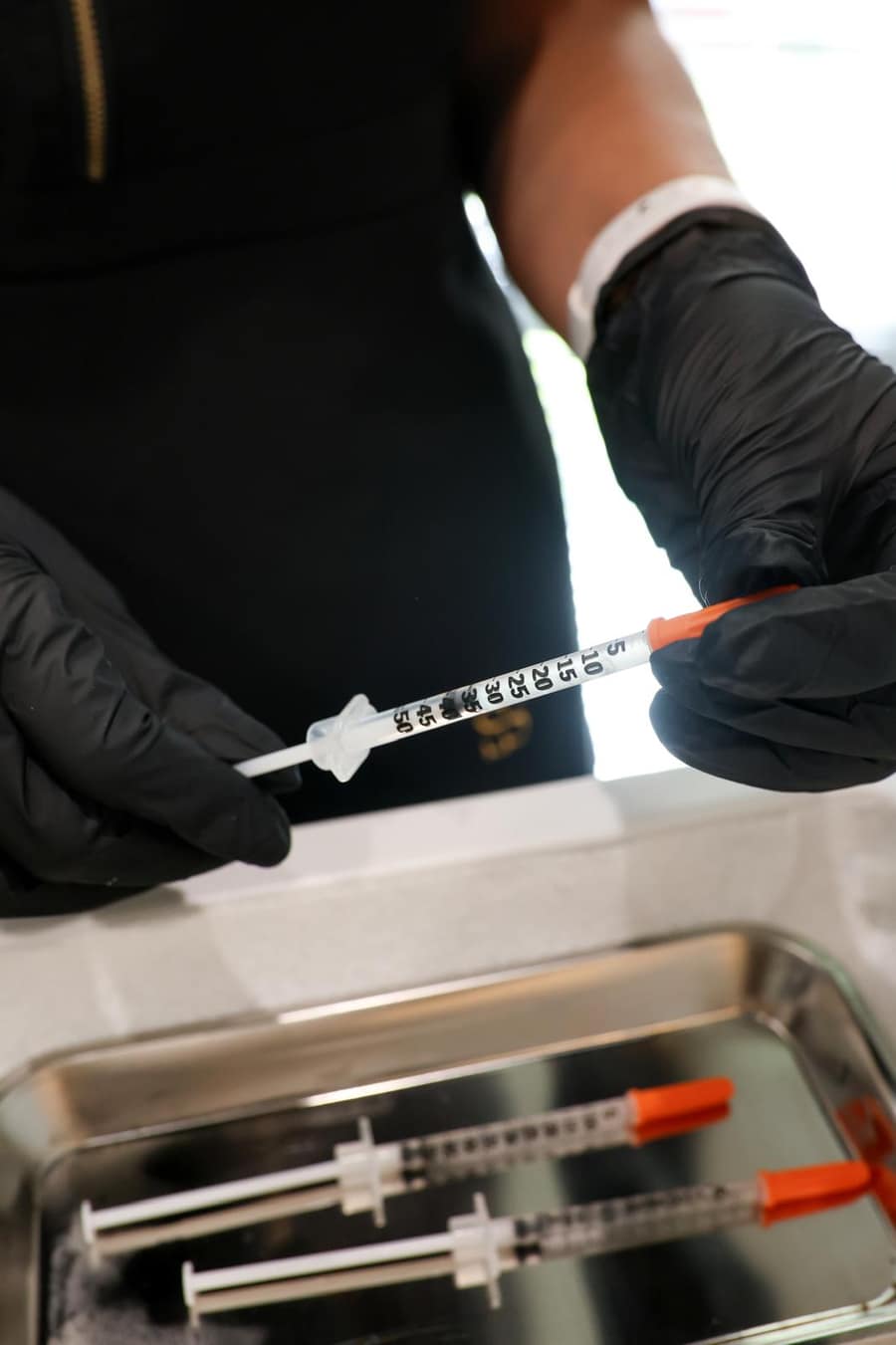
The tear trough is the groove that runs from the inner corner of the eye down across the top of the cheek. As the fat pads that once cushioned the lower lid and upper cheek lose volume, that groove deepens — and because it sits in shadow, the result reads as a dark, hollow, permanently tired under-eye, along with a crease or indentation into the cheek.
Tear trough filler softens that hollow by replacing a small amount of the lost volume with hyaluronic-acid gel, so the shadow has less to sit in. Done conservatively it takes years of tiredness off a face. Done badly it is one of the most obvious treatments on the menu, which is why this page spends as much time on what it can’t do as on what it can.
Shadow or pigment? It decides everything
This is the single most useful thing to understand before you book, anywhere. Save Face — the Professional Standards Authority-accredited register the NHS points patients toward — states it plainly: tear trough filler only improves the darkness caused by shadowing from volume loss, and it does not remove pigmentation.
So there is a test worth doing at home. Stand at a mirror and tilt your chin up towards the light. If the darkness lifts as the light fills the hollow, you’re looking at a shadow, and filler is a reasonable conversation. If the colour stays exactly where it is, it’s pigment — and filler will do nothing for it. Pigmented under-eyes are common, often genetic or related to rubbing and allergies, and no amount of filler lightens them.
When the answer is no
Save Face lists several groups as unsuitable from the outset: increased fluid retention, excessive skin laxity under the eye, prominent or protruding eye bags, or other underlying medical factors. That last group matters most in practice. Genuine eye bags — where fat has pushed forward rather than fallen away — are a surgical problem, and packing filler in around them tends to make the whole area look heavier rather than fresher. Fluid retention behaves the same way: put filler into an area that already holds water and you can end up with a permanent puffiness that is far harder to live with than the hollow you started with.
Often the real fix isn’t the eye at all. When the mid-face has flattened, supporting it with cheek filler lifts the whole area and improves the under-eye shadow without putting anything near the eye. Safina will say if that is the better route for you.
Said plainly
The risks, and why this area is different
The skin under the eye is the thinnest on the face and there is very little fat beneath it, so it hides nothing. Filler placed too close to the surface can show through as a bluish-grey tinge — the Tyndall effect. It can also leave visible lumps, or cause chronic puffiness if it sits where fluid needs to drain. These are the common problems, and they are the reason the filler goes in deep, conservatively, and in small amounts.
The serious risk is vascular occlusion — filler blocking a blood vessel. Save Face sets out that in rare cases where filler enters vessels travelling to the eye itself, this can cause blindness. It is rare. It is also the reason a tear trough treatment should never be a bargain, a rushed appointment, or something booked from a social media offer without a consultation first.
Two things make that risk manageable. The first is honest assessment — most bad outcomes start with treating someone who should have been turned away. The second is that hyaluronic-acid filler is reversible: it can be broken down with an enzyme called hyaluronidase, so a result you dislike, filler that has migrated, or a complication that needs correcting can all be undone. Nothing here is permanent.
One more thing worth knowing, because few clinics mention it. A retrospective study of tear trough filler published in the Journal of Clinical and Aesthetic Dermatology (Puyana & Montes, 2025) found that where delayed complications occurred, they showed up on average around 16.8 monthsafter treatment. Filler under the eye can sit and behave differently for far longer than people assume — which is an argument for going in conservatively and reviewing, not for topping up frequently.
What to expect
Your treatment, step by step
Consultation & assessment
The most important step, and the one that can end in a no. Safina looks at whether your under-eye darkness is shadow or pigment, how much skin laxity and fluid retention you have, and whether the real issue is the mid-face rather than the eye itself.
Planning the approach
Sometimes the answer is a small amount of filler in the tear trough. Sometimes it's cheek filler to support the mid-face first, or a skin-quality treatment instead. You'll be told which, and why, before anything is booked.
Numbing & careful placement
The area is numbed, then a conservative amount of hyaluronic-acid filler is placed deep against the bone rather than superficially — the depth matters here, because filler sitting too close to the surface is what causes a bluish tinge.
Settling & review
You'll see a change straight away, but the honest result is the one at two to four weeks once swelling has gone. A review lets us check it has settled evenly and decide whether anything more is needed — usually it isn't.
Afterwards
Recovery, and when to judge it
Expect mild swelling for several days. Bruising doesn’t always happen, but when it does Save Face’s guidance is that it can last one to two weeks — this is a delicate, well-supplied area and a small bruise is not a sign anything went wrong. The area settles fully and the filler integrates into the tissue at around two to four weeks.
So don’t judge your under-eyes at day three, and don’t book this in the fortnight before a wedding or a holiday. If you have a date in mind, our bridal beauty timeline sets out how far ahead injectables need to happen — and first-time treatments need longer still.
The other route
When skin quality is the real problem
Not every tired under-eye is a hollow. Sometimes the skin there has simply gone thin, crepey and dull, so it shows what’s underneath more than it used to. Filler is the wrong tool for that, and adding volume to fix a texture problem is how people end up puffy.
The alternative on the menu is under-eye polynucleotide boosters at £130, a course of two to three sessions that works on the quality and thickness of the skin rather than adding volume beneath it. It’s a smaller, gentler intervention, and for the right person it’s the better one. Our guide to Profhilo vs fillers explains the wider principle: a shape complaint is filler, a surface complaint is a skin booster. The under-eye is simply the area where getting that distinction wrong shows up fastest.
Pricing
Tear trough & under-eye prices
All three options below are listed together deliberately — the right one depends on whether your concern is volume, skin quality, or filler that needs removing.
Tear trough (under eyes)35 min
Hyaluronic-acid filler to soften dark hollows
£225
Under-eye polynucleotide boosters30 min
Skin quality rather than volume; 2–3 sessions
£130
Dissolving filler30 min
For migration or correction; patch test required
from £120
Prices are correct at the time of publishing and are confirmed at your consultation. Some treatments start from the price shown and vary with the amount of product used or the area treated.
Tear trough filler is part of the wider dermal filler menu — see that page for cheeks, chin, jawline, nose and lines. Not sure whether you need filler at all? Our guide to anti-wrinkle injections vs fillers works through which concern responds to which treatment.
Before you book — here or anywhere
Questions worth asking
Save Face’s advice for this treatment specifically is to ask about a practitioner’s experience with tear troughs, not with dermal filler in general — the under-eye is its own skill, and a confident lip injector is not automatically the right person for it. Worth asking too: what happens if something goes wrong, and whether they hold hyaluronidase to dissolve filler if it’s needed. The NHS makes the same general point in its guide to choosing who will do your cosmetic procedure: ask what qualifications and training they have, how many of these they’ve done, and whether they’re insured.
At Lady Young’s the answers are straightforward, because there is one practitioner throughout. Safina has sixteen years in the beauty industry, holds a Level 5 Ofqual qualification in aesthetics and is fully insured — you can read more on the about page, or see what clients say on the reviews page. And if she doesn’t think tear trough filler is right for you, she will say so at the consultation rather than take the booking.
Your questions
Tear trough filler FAQs
You might also like
Related treatments & guides
Book your appointment
Ready when you are
Every treatment starts with an honest, no-pressure consultation. Book online in a few taps, or get in touch with any questions.
Call 07500 503034 · Bracknell, Berkshire