
Aesthetics · Dermal fillers
Chin Filler in Bracknell
The treatment people book after seeing themselves in a photo taken from the side. Projection, definition and balance through the lower face — £160, dissolvable, and only when it is genuinely the right answer.
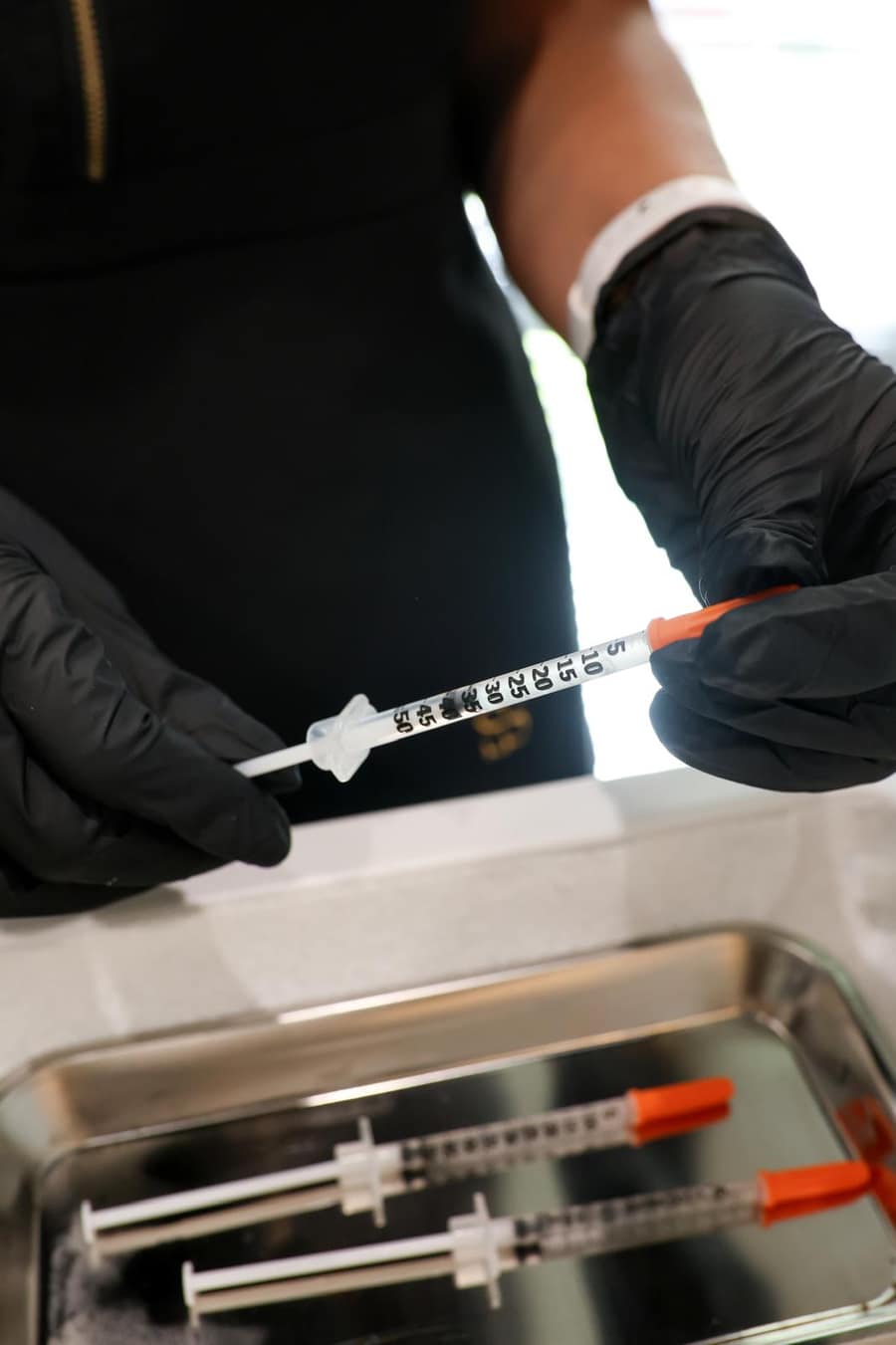
Most people do not go looking for chin filler. They notice something in a side-on photograph — that the chin seems to disappear into the neck, or that the lower face looks shorter than the rest of it — and go hunting for what would fix it. Often they arrive asking about jawline filler when the chin is doing most of the damage.
Chin filler is hyaluronic acid placed at the point of the chin to add projection, length and definition. In the clinic’s own words it adds definition and sculpting, can be used for chin dips, and makes a real difference to the side profile as well as balancing the face. It is £160 for a 30-minute appointment, and because it is hyaluronic acid it can be dissolved if you change your mind.
It is also one of the easiest treatments to oversell, so this page sets out what the published evidence actually supports, where the real risk in this area sits, and the cases where surgery — not filler — is the honest answer.
What chin filler actually changes
- Projection. Bringing the point of the chin forward so it sits in better proportion with the nose and lips. This is the change that transforms a side profile, and it is usually smaller than people expect.
- Length. Lengthening a short lower third, which tends to make the whole face read as more balanced rather than making the chin look big.
- Chin dips and dimpling. Smoothing the dented, orange-peel texture some chins have, and filling a central dip or crease.
- Definition at the front of the jaw. A better-defined chin point gives the jawline somewhere to finish, which is why chin and jaw work are often discussed in the same conversation.
What it does not do is reduce anything. It adds. If the lower face looks heavy or wide to you, adding filler to the chin will not take that away, and anyone telling you it will is guessing at your anatomy.
The decision underneath
Filler, or something filler can’t fix?
A chin that sits back is called retrusion, and how far back it sits decides which treatment is honest. This is the single most important thing on this page.
- Mild to moderate retrusion. This is filler territory, and it is the group the randomised evidence below was conducted in. A relatively small amount of product can noticeably change the profile, same day, reversibly.
- Significant skeletal recession, or a bite that does not meet properly. Here the chin bone and jaw position are the issue, and filler can only soften the outline of a problem it cannot move. That is a conversation for a maxillofacial surgeon or an orthodontist, and no amount of filler is a substitute for it.
A 2026 systematic review in Aesthetic Plastic Surgery compared surgical and non-surgical chin augmentation across 56 studies and 4,844 patients, and it is refreshingly blunt about the trade. Surgery — a bone genioplasty or an implant — gave durable improvements in projection with high satisfaction, but carried infection, implant problems, bone resorption and lasting changes in sensation. Filler gave rapid contour improvement and high short-term satisfaction with mostly transient effects, but with rare serious vascular complications. Neither is simply better. They are different purchases with different risks and very different timescales.
Safina does not perform surgery, which means she has nothing to gain from steering you away from it. If your chin needs more than filler can honestly give, you will be told so at the consultation.
Being straight with you
What the research shows, and what it doesn’t
Chin filler has better evidence behind it than several treatments marketed far more aggressively, and it still is not as strong as the marketing suggests. Here is where it actually sits.
The best single study is a randomised, multicentre, evaluator-blinded trial published in Aesthetic Plastic Surgery in 2025. It enrolled 159 participants with mild to moderately severe chin retrusion and randomised them either to be treated at the start or six months later. At six months, 64.2% of the treated group had improved by at least one point on a validated chin retrusion scale, judged by independent assessors, against 20.8% of the untreated group. The response was still maintained in most participants at twelve months, and 5.0% had a treatment-related side effect.
Read the design carefully, though, because it explains one striking number. The control group received nothing for six months rather than a dummy injection, so when participants rated their own improvement the treated group scored 91.5% and the untreated group scored 0.0% — which is roughly what you would expect from people who know perfectly well whether they were treated. The 64.2% figure is the one worth trusting, because the assessors were blinded.
On how long it lasts, a 2026 systematic review of injectable chin augmentation pooled 11 studies and 876 patientsand found over 90% satisfaction with adverse effects that were minor and transient — swelling, bruising and lumpiness. But the average follow-up across those studies was just 12.8 months, and the authors describe the evidence as heterogeneous and largely non-comparative, which limits any conclusion about long-term results. In plain terms: around a year is well supported, and anything claimed beyond that is extrapolation.
A larger 2023 review in Cureus covering 2,738 patients across 24 articles reached much the same conclusion on satisfaction — while noting that among those studies, one reported a major necrotic complication. That is the honest shape of this treatment: usually straightforward, occasionally serious, and worth understanding before rather than after.
Said plainly
The risk that is specific to the chin
Every filler treatment carries the same headline risk: filler entering a blood vessel instead of the tissue around it, blocking the supply and damaging the skin downstream. What differs between areas is the anatomy, and the chin has anatomy worth knowing about.
The blood supply to the point of the chin is the ascending mental artery. A cadaveric study in Plastic and Reconstructive Surgery dissected 31 faces and mapped it precisely: the dominant artery enters the chin just off-centre, around 6 mm from the midline, within the muscle layer, at a depth of about 4 mm from the skin surface. The authors note it also joins up with the artery under the tongue, in the floor of the mouth. Their conclusion is directed at injectors rather than patients: anyone treating this area should know the vessel’s course and use technique that avoids it.
A second anatomical study, in the Journal of Cosmetic Dermatology, examined that same connection because of reported cases of tissue damage in the tongue and floor of the mouth after chin filler. It is described there as a rare complication, and the study exists because the reported incidence has been rising as the treatment becomes more popular.
None of this means chin filler is dangerous in careful hands. It means the questions that matter are about the person holding the syringe, not the product in it: do they know this anatomy, do they inject slowly and in small amounts, and do they keep hyaluronidase — the enzyme that dissolves hyaluronic acid — on the premises in case it is ever needed? Those are fair questions to ask anywhere, and you should expect a straight answer.
What to expect
Your treatment, step by step
Consultation
The first job is working out whether your chin is the problem at all. Safina looks at your profile as well as straight on, because a chin that looks fine face-forward can be the reason a side profile does not sit right. This is also where your medical history is checked and where you will be told honestly if filler is the wrong answer for your face.
Mapping and numbing
The area is cleaned and the injection points planned against your own anatomy rather than a template. The filler contains local anaesthetic, and numbing cream can be used as well. The chin is firmer tissue than the lips, so you feel pressure more than anything sharp.
The treatment — about 30 minutes
Filler is placed in small amounts and built up gradually, with you sitting up to check the profile as it goes rather than only at the end. You see the shape change in the appointment. You can drive yourself home and go back to work the same day.
Settling, then a proper look at two weeks
Swelling peaks in the first 24 to 48 hours and the area can feel firm for several days. Filler needs around two weeks to integrate and soften, so two weeks is when you judge it — not day three, and definitely not in the car park.
Afterwards
Recovery, and when to judge it
This is one of the easier areas to recover from. Expect swelling and possible bruising for the first couple of days, tenderness when you press on the chin, and a firmer feel than you are used to for up to a week or two as the filler settles. Most people go back to work the same day.
For the first 24 to 48 hours, leave the area alone: no pressing or massaging, no heavy exercise, no saunas, steam rooms or very hot baths, and try to sleep on your back rather than face-down in a pillow. Full aftercare advice is given at your appointment.
Then wait. Filler takes around two weeks to integrate and soften, and chins look oddly prominent in the first few days because of swelling on top of product. Two weeks is the point at which the result is real and the point at which a review makes sense. If something genuinely is not right, say so — hyaluronic acid is dissolvable, which is exactly why it is the sensible material to start with.
In the treatment room
The consultation does the real work
Everything on this page — whether filler suits your chin, whether surgery is the better answer, how much product is sensible — is settled in conversation before anything is injected, by the same person who will carry out the treatment.

Pricing
Chin filler price
One price, one appointment. How much product your chin needs is judged at the consultation, and if a second session would give a better result than overfilling in one go, you will be told that rather than sold it.
Chin filler30 min
Definition and side-profile balance
£160
Prices are correct at the time of publishing and are confirmed at your consultation. Some treatments start from the price shown and vary with the amount of product used or the area treated.
Thinking about the lower face as a whole? Jawline filler is from £250 and treats the line running back towards the ear rather than the chin point itself. The full dermal filler menu lists every area and price together, including dissolving from £120 if you ever want filler removed.
Not sure whether your concern is volume or movement? Our guide to anti-wrinkle injections vs fillers explains which complaints each one answers — they are not interchangeable, and the cheaper one is not automatically the right one.
Before you book — here or anywhere
Questions worth asking
Dermal fillers are not prescription medicines in the UK, which means the product is not what protects you — the practitioner is. The NHS guide to choosing who will do your cosmetic procedure sets out the basics: check their training and experience, ask how many of these they have done, and confirm they are insured. For chin filler specifically, add the three from the risk section above — the anatomy, the injection technique, and whether hyaluronidase is kept on site.
At Lady Young’s the same person does your consultation and your treatment. Safina has sixteen years in the beauty industry, holds a Level 5 Ofqual qualification in aesthetics and is fully insured. You can read more on the about page, see what clients say on the reviews page, or send a side-profile photo and ask whether chin filler would actually do anything for your face. If the answer is no, she will say so.
Your questions
Chin filler FAQs
You might also like
Related treatments & guides
Jawline Filler
Sharpens the line from chin to ear. Often discussed alongside chin filler for side-profile work. From £250.
View jawline fillerNon-Surgical Rhinoplasty
The other half of a side profile — balancing the nose, where a little chin projection sometimes does more. £250.
Learn moreCheek Filler
Mid-face volume and lift, for when the structure higher up is what has changed. From £230.
Learn moreBook your appointment
Ready when you are
Every treatment starts with an honest, no-pressure consultation. Book online in a few taps, or get in touch with any questions.
Call 07500 503034 · Bracknell, Berkshire